Making the Most of Jazz Fest 2026

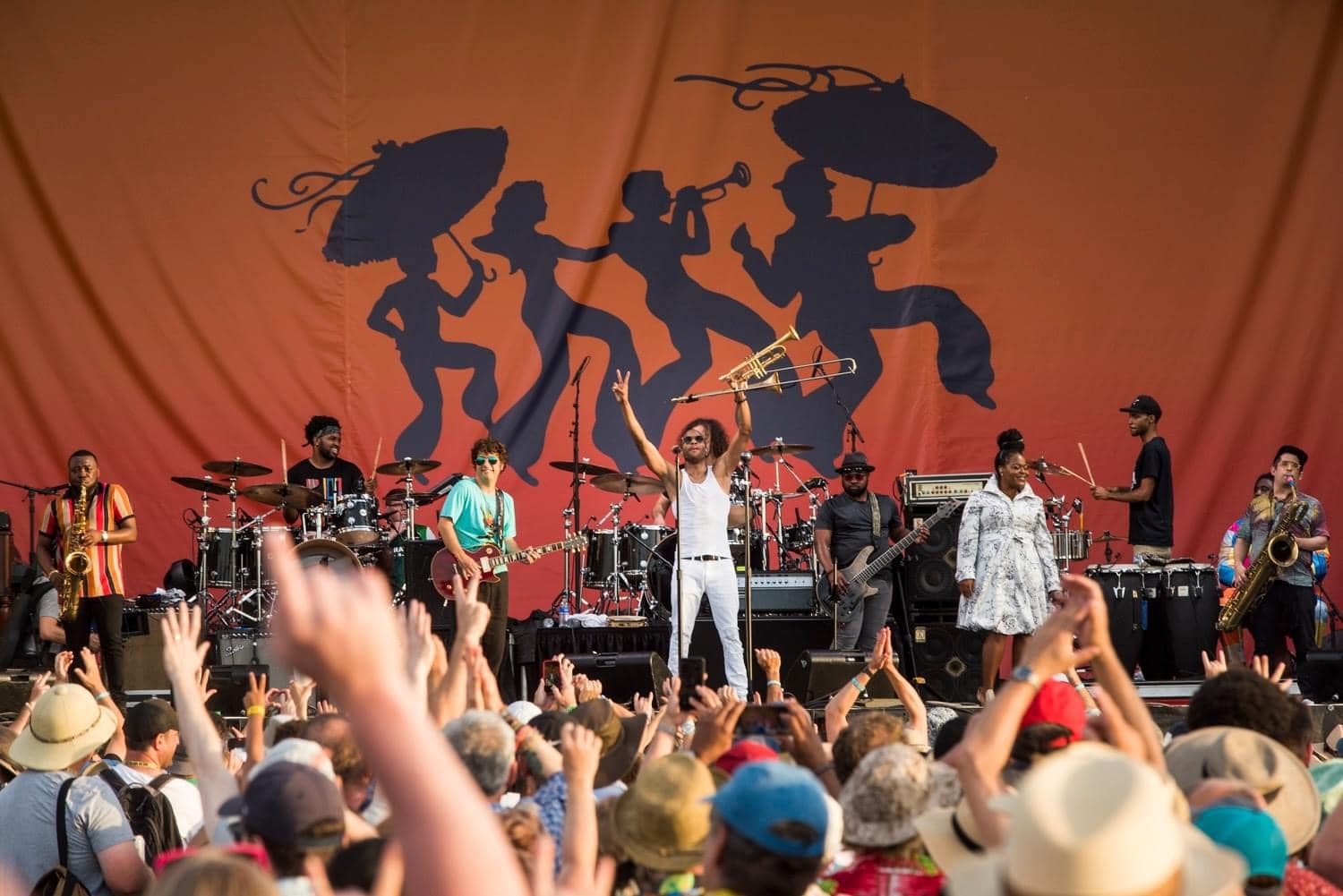
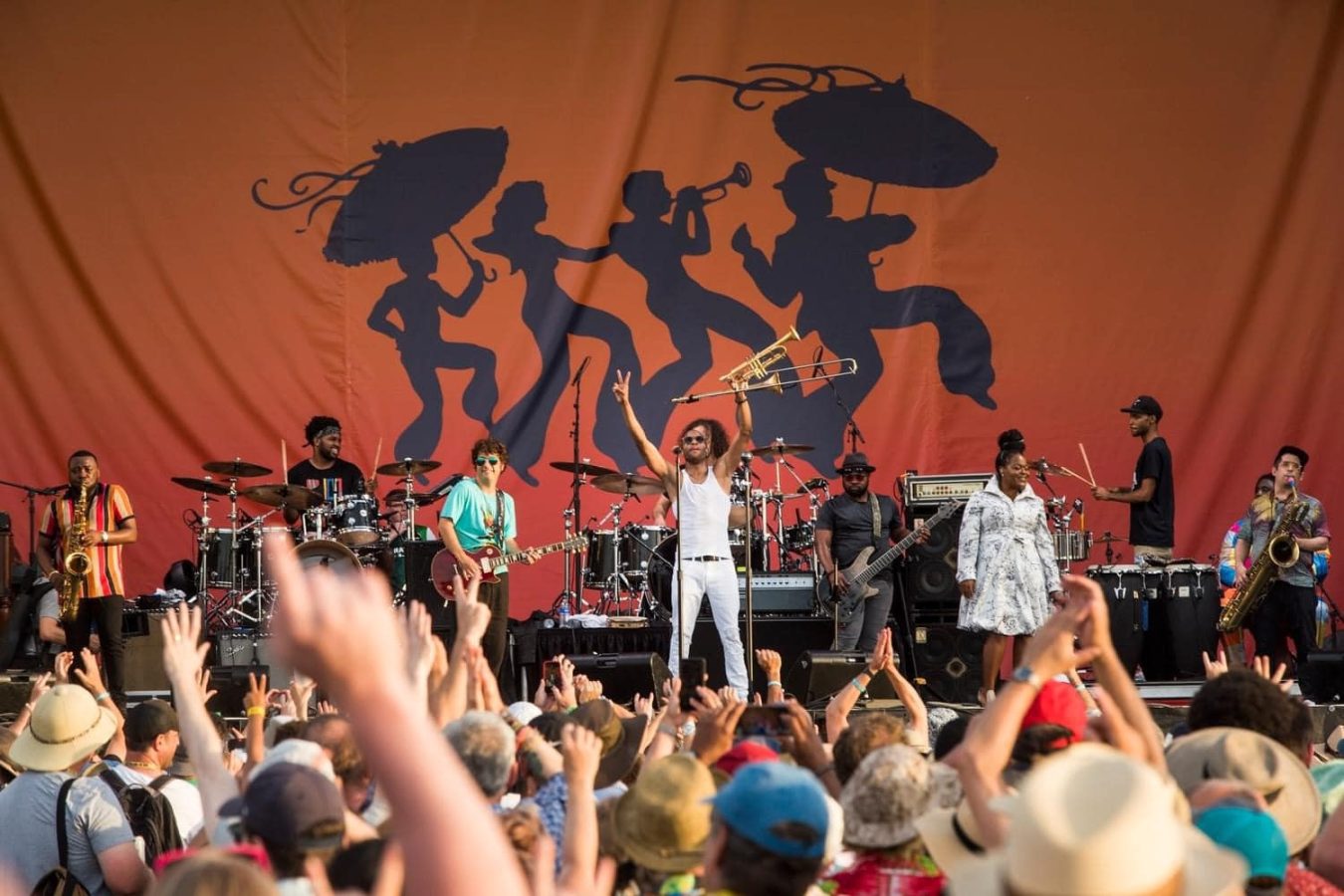
Photo courtesy of New Orleans Jazz Fest on Facebook

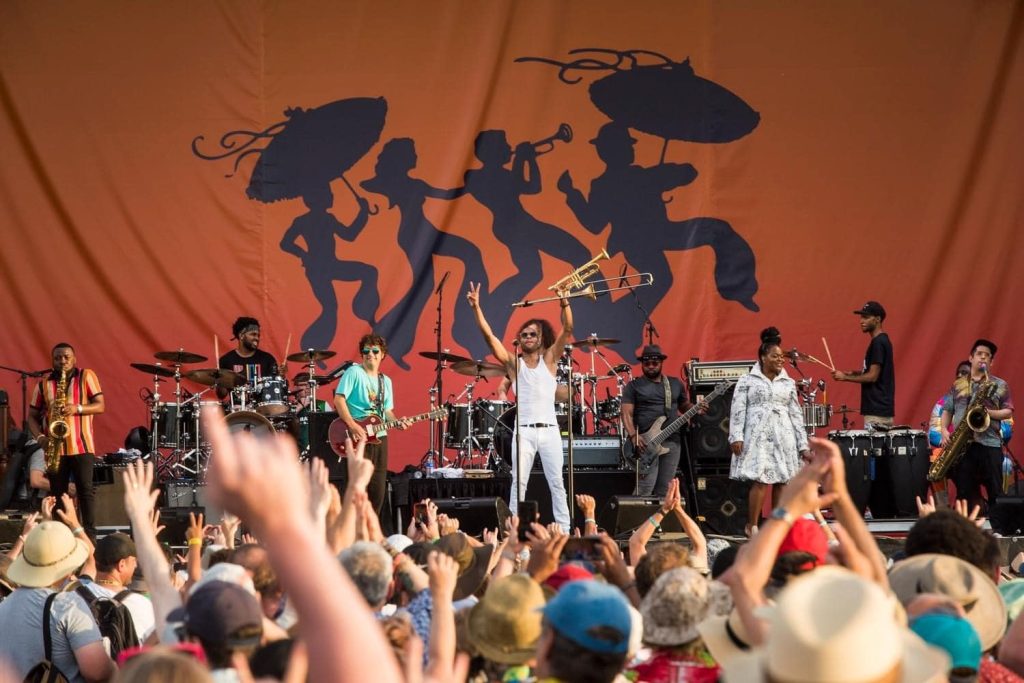
It’s almost that time of year again — time to sip the iced tea, snack on crawfish Monica, and sway to the music of local and international musicians under the hot New Orleans sun. The New Orleans Jazz and Heritage Festival, or Jazz Fest, is one of the most celebrated festivals in New Orleans and takes place every year during the last weekend of April and the first weekend in May. Jazz Fest has been around since 1970 and gets bigger and better every year.

During these two weekends, locals and out-of-towners get together to enjoy the culture of New Orleans with the various food, crafts, and performances that Jazz Fest has to offer. Contrary to the name, the New Orleans Jazz and Heritage Festival is more than just jazz music.

Various musical genres like hip-hop, zydeco, blues, tribal, and electronic music can all be heard live from Jazz Fest’s multiple stages. This year the New Orleans Jazz and Heritage Festival will take place at its usual spot on the Fair Grounds Race Course & Slots (1751 Gentilly Blvd.) starting on Thursday, April 23, and ending on Sunday, May 3, 2026.

Some of the top headliners for the festival include The Eagles, Stevie Nicks (her only 2026 show), Rod Stewart (on his farewell tour), and David Byrne. Among the local favorites, you can expect Irma Thomas, Trombone Shorty & Orleans Avenue, Jon Batiste, Big Freedia, Preservation Hall Jazz Band, and many more.

Other popular acts include Kings of Leon, The Black Keys, Widespread Panic, and hundreds more. The music schedule is broken down by day in cubes with times for all the acts, which you can view here.

Of course, one of the best parts of Jazz Fest is the food. Some staples for food include mango freezes, ya-ka-mein, snoballs, poboys, and much more. Here’s the list of 2026 food vendors.

As a result of this sheer scope and size, in many ways, Jazz Fest feels like too overwhelming an event to properly tackle, especially for those who are attending for the first time.

Regarding the festival’s musical acts, there are plenty of commentators who think festival organizers have unfairly stretched the definition of what music falls under the jazz and heritage rubric. We’re not here to debate that topic, but rather point out that there is undoubtedly a wide variety of genre presence at Jazz Fest, which only adds to the looming sense of choice overload.

With all of that in mind, there are some sound tactics for making Jazz Fest more manageable. Here are some of our time-tested strategies.

Ride a Bike

While this choice isn’t going to work for everyone — some visitors simply don’t have urban cycling experience or are scared of the prospect — we can’t stress just how much biking can improve the Jazz Fest experience. Even the most diehard Jazz Fest boosters will admit parking can be a nightmare during the festival. Parking enforcement officers are on high alert — we’ve never seen the impound lot on Claiborne Avenue get quite so busy as it does during Jazz Fest.

Of course, you can pay for parking. Folks who live near the Fairgrounds will turn even the smallest plot of the backyard into an impromptu parking lot (rates vary, but around $30 per day seemed to be the going rate in the past).

There are other ways of outflanking the parking issue, including the official Jazz Fest shuttle, taxis (both cars and bicycle rickshaws), rideshare, and the streetcar. Note that if you take the streetcar, you’ll still have to walk about a half mile to the festival entrance. (Take the number 48 line that runs on Canal Street and get off at the final stop at City Park/Art Museum.)

But we really love getting to Jazz Fest on two non-motorized wheels. Bike lane infrastructure can now bring riders to the gates of Jazz Fest. If you’re staying in the French Quarter, the bike ride to the Fairgrounds covers a 10-15 minute straight shot up Esplanade Avenue.

Plus, there is extensive bicycle “parking” (overlooked by security staff) on site. While we can’t guarantee what the weather will be like during Jazz Fest weekends, in general, late April and early May form a lovely climate window in New Orleans.

In addition, being on a bicycle gives visitors a better sense of the city. You can see New Orleans at the street level without the loss of time walking might engender. There’s an intimacy to biking in the city that’s tough to replicate from a car.

Shape Your Cube

The Jazz Fest lineup is famously scheduled into “cubes” for attendees. Devising a schedule for seeing all of your favorite acts can be a fun logistical challenge, but don’t forget that the stages of Jazz Fest are spread out over a decently large area. If you’re in the middle of the crowd at one of the main stages, it can take about 10 or 15 minutes just to extricate yourself from the center of mass.

Note that Sundays and Thursdays always feel a little bit less crowded at the racetrack, although that “little bit less” is admittedly a relative number — there are no real “light” days at Jazz Fest.

The way you assemble your cube is up to you, but here are some pointers we’ve picked up over the years:

  • Stick to your cube, but don’t do so religiously. Part of the fun of Jazz Fest is simply letting the music take you wherever it wants to go.
  • Don’t ignore smaller stages. We found one of our great unexpected Jazz Fest shows at the Kids Tent. We also always find the Fais Do-Do stage to be a consistently good break in our routine — basically, you can never go wrong dancing to Cajun or zydeco music.
  • Visit the Gospel Tent at least once. We’ve consistently found that even those who know next to nothing about gospel music have their spirits lifted and their musical boundaries expanded in this venue.

Cool Off

It can get hot during Jazz Fest. A few good means of beating the heat include:

  • Enjoying the air conditioning in the Grandstands
  • Hitting the mist tents by the Gentilly Stage and #2 food vendor area
  • Sitting down and relaxing in the vicinity of the Louisiana Folklife Village
  • Getting strawberry lemonade and Mango Freeze! (And of course, hydrating with water)
  • Staying out of the scrum for bigger headliners

Priorities, Priorities

While the price of Jazz Fest tickets continues to climb, the fact of the matter is you can still see some grade-A headliners for a bargain rate compared to similar (or even smaller) festivals. Many locals treat Jazz Fest as a chance to see big acts for relatively cheap. On the flip side, if you live in or near the city, you can see the New Orleans musicians throughout the year at local venues, which means there’s less pressure to see them on the Fairgrounds.

If you’re coming in from out of town, you may have the opposite scenario prioritized — you can see big-name acts anywhere, but this is your best chance of seeing Louisiana music on its native soil. In addition, smaller local acts often occupy stages that are less crowded, and everyone enjoys a break from the seething masses.

With all of that said, don’t forget that during the “off days” in between the two festival weekends, many smaller and mid-sized acts will be playing gigs around town. If you miss them at the Fest, you may well catch them on Frenchmen Street.

With that said, there’s something about seeing local acts at Jazz Fest. The big-name headliners are used to huge audiences. A local Louisiana act would be playing to wow the world, and some of those sets end up being nothing short of legendary.

What to Know About the 2026 Jazz Fest

  • Jazz Fest will remain cashless. Ticket, food, beverage, craft, and merchandise booths no longer accept cash payments. If you come to the event with only cash, the Festival will offer two cash exchange booths near key vending locations so you can get a prepaid card for your cash.
  • This year, Jazz Fest features over 5,000 musicians across 15 stages.
  • The festival will be one of the largest in its 55-year history. Eight is the most number of days for the event, and this year there will be the most food vendors and food items ever. And there will also be over 250 arts and craft vendors.
  • “Locals Thursday” will be April 23 this year, with discounted tickets for Louisiana residents.
  • This year, Jazz Fest will celebrate Jamaica’s musical and cultural diversity at the Cultural Exchange Pavilion. During the festival, dozens of bands and a wide variety of artisans from throughout Jamaica will present their sounds and traditions.
  • The Jazz & Heritage Gala kicks off Jazz Fest with the celebration of Louisiana music and cuisine on Wednesday, April 22, at Generations Hall (310 Andrew Higgins Blvd.).
  • Check out the event’s FAQ section for more details.

Are You Coming to Jazz Fest?

We’d love for you to stay with us! Take advantage of our specials, group rates, and best-rate guarantee for greater savings to spend on New Orleans famous cuisine and enjoy everything this magnificent city has to offer. Reserve your room today!

Also, consider booking a guided tour of the famous St. Louis Cemetery No. 1 to experience the hauntingly beautiful past of New Orleans. And, for easy, informative sightseeing, we recommend the City Sightseeing New Orleans city tour on the open-top, double-decker bus. It runs every 30 minutes through the Garden District, French Quarter, and CBD. You can hop on and off anytime!
Year at a Glance in New Orleans

From major music and cultural events to the festivals that honor just about every local food there is, New Orleans celebrates life like no other city. From the fabulously unique traditions like Reveillon and Super Sunday to the Saints football season, the city doesn’t stop eating, drinking, and celebrating. To give you a glimpse of just how much is going on in New Orleans all year round, here’s a quick look at the annual highlights grouped by season.

Fall (September 1 – November 30)

Cooler temps and the seemingly endless slew of food, drink and music festivals are on tap in the fall in New Orleans, starting over the Labor Day weekend with the massive and fabulous Southern Decadence, a popular festival that celebrates LGBTQ+ with block parties, shows, and a parade.

October begins with the ever-expanding National Fried Chicken Festival at the Lakefront. Also, New Orleans throws its version of Oktoberfest over the three weekends at Deutsches Haus in Mid-City, to celebrate the city’s rich German history, followed by one of the best-attended art events in the city, Art for Art’s Sake.

Don’t miss the Crescent City Blues and BBQ Festival, the Tremé Fall Festival, and the New Orleans Film Festival, which is one of the largest film festivals in the South and is the longest-running festival of its kind in the state.

New Orleans does Halloween like no other city, so if you’re lucky to be visiting around that time, consider any of the balls, costume parties, parade, haunted tours, and a huge block party on Frenchmen Street! The kid-friendly parade called Krewe of Boo rolls through the French Quarter, courtesy of Kern Studios, and there are many more Halloween activities around the city happening in the couple weeks leading up to Halloween.

November brings more food festivals — the Oak Street Po-Boy Festival and the Beignet Festival at the New Orleans City Park Festival Grounds. Also in November is the annual LUNA Fête that brings large-scale light and sound installations to Gallier Hall and Piazza d’Italia.

Thanksgiving at the Fair Grounds Race Course is a long-standing New Orleans tradition of turning out at the track on Thanksgiving Day to watch the opening-day races while sporting cocktails and fabulous hats. Next, there’s Bayou Classic, a fan fest, a parade, the battle of the bands, and, of course, the big game at the Superdome between Southern University and Grambling State University.

The beloved Celebration in the Oaks kicks off the holiday season with a dazzling holiday lights festival scattered throughout the 25 acres of City Park, including the Botanical Garden, Storyland, and Carousel Gardens Amusement Park.

Winter (December 1 – February 28)

There’s a whole slew of events that accompany Christmastime in the Crescent City, from bonfires on the Algiers levees to concerts at St. Louis Cathedral to the family-friendly NOLA Christmasfest to Reveillon menus at some of the city’s classic Creole restaurants. The streetcars are decked with wreaths, and the city is alight with the holiday sparkle.

The New Year’s Eve celebrations in New Orleans include the Dick Clark Rockin’ New Year’s Eve at the historic JAX Brewery in the French Quarter, with a fleur-de-lis drop at midnight to the countdown on Jackson Square, quite a few balcony parties on and around Bourbon Street, and the fireworks over the Mississippi River.

The first day of the carnival season known as Twelfth Night, or the Epiphany, kicks off every year with three parades — Phunny Phorty Phellows ride the streetcar from Uptown to Canal Street and back, plus the walking Krewe of Joan of Arc in the French Quarter, and the Société Des Champs Elysée.

Mardi Gras season culminates every year on Fat Tuesday anytime between February 3 and March 9 (February 17 in 2026). There’s not enough room to describe one of the great spectacles in the world, but keep up with the parade schedule to at least get started on how to do Mardi Gras in New Orleans.

February closes with an enormous public Tet celebration in New Orleans East to celebrate the Lunar New Year (did you know that New Orleans is home to one of the largest Vietnamese diaspora communities in the country?), and Valentine’s Day – which isn’t unique to New Orleans but is nevertheless good to celebrate in one of the most romantic cities in the world.

Spring (March 1 – May 31)

Lovely weather and endless festivals continue this time of year with Wednesday at the Square; the Congo Square Rhythms Festival; the Tennessee Williams Literary Festival (don’t miss the “Stella!” shouting contest); the Mid-City’s own Bayou Boogaloo, held on the picturesque banks of Bayou St. John; the Freret Street Festival that’s getting bigger every year; and, of course, the two heavy hitters and the reason so many visitors come to New Orleans in the spring – the French Quarter Fest and Jazz Fest.

St. Patrick’s Day and Easter are subject to more celebration, with multiple parades and parties. Finally, the Mardi Gras Indians Super Sunday is a treasured tradition dating back to the 19th century and held on the Sunday closest to St. Joseph’s Day, which gets its own unique celebration across the Catholic churches and even private homes in the city with the beautifully appointed altars (the Italian-Sicilian contribution to New Orleans’ rich cultural tapestry).

Summer (June 1 – August 31)

Want to cross an iconic New Orleans restaurant off your bucket list? There’s no time like Restaurant Week New Orleans, during which dozens of participating restaurants, from the James Beard luminaries to the new hotspots to the Creole grand dames, offer set-course menus at a deep discount. Also in June is another culinary fest, the New Orleans Wine & Food Experience, and the popular Louisiana Cajun-Zydeco Festival, held at Louis Armstrong Park.

Summers here can be pretty hot and humid, but still, the best restaurants and bars in town celebrate Tales of the Cocktail in July, and COOLinary New Orleans with prix fixe menus in August. You can also browse the galleries on the White Linen Night (or exactly a week later, the Dirty Linen Night).

The city comes to life for the Satchmo SummerFest and a slew of events over the Fourth of July and the Labor Day weekends, like Go 4th on the River, and the ESSENCE Festival of Culture at the Superdome. The French Market Creole Tomato Festival is one of the smaller fests to enjoy, and Running of the Bulls brings Encierro to New Orleans, except the bulls are the Big Easy Rollergirls.

Finally, the Red Dress Run (who doesn’t want to run a madcap two-mile course through the city in August while wearing a red dress?) will at least keep your mind off the heat.

As you can see, we have a lot going on all year round! No matter when you visit, take advantage of our specials, group rates, and best-rate guarantee for greater savings to spend on New Orleans famous French Quarter cuisine and enjoying everything this magnificent city has to offer. Reserve your room today!

Also, consider booking a guided tour of the famous St. Louis Cemetery No. 1 to experience the hauntingly beautiful past of New Orleans. And, for easy, informative sightseeing, we recommend the City Sightseeing New Orleans city tour on the open-top, double-decker bus. It runs every 30 minutes through the Garden District, French Quarter, and CBD. You can hop on and off anytime!
History of the Place d’Armes Hotel

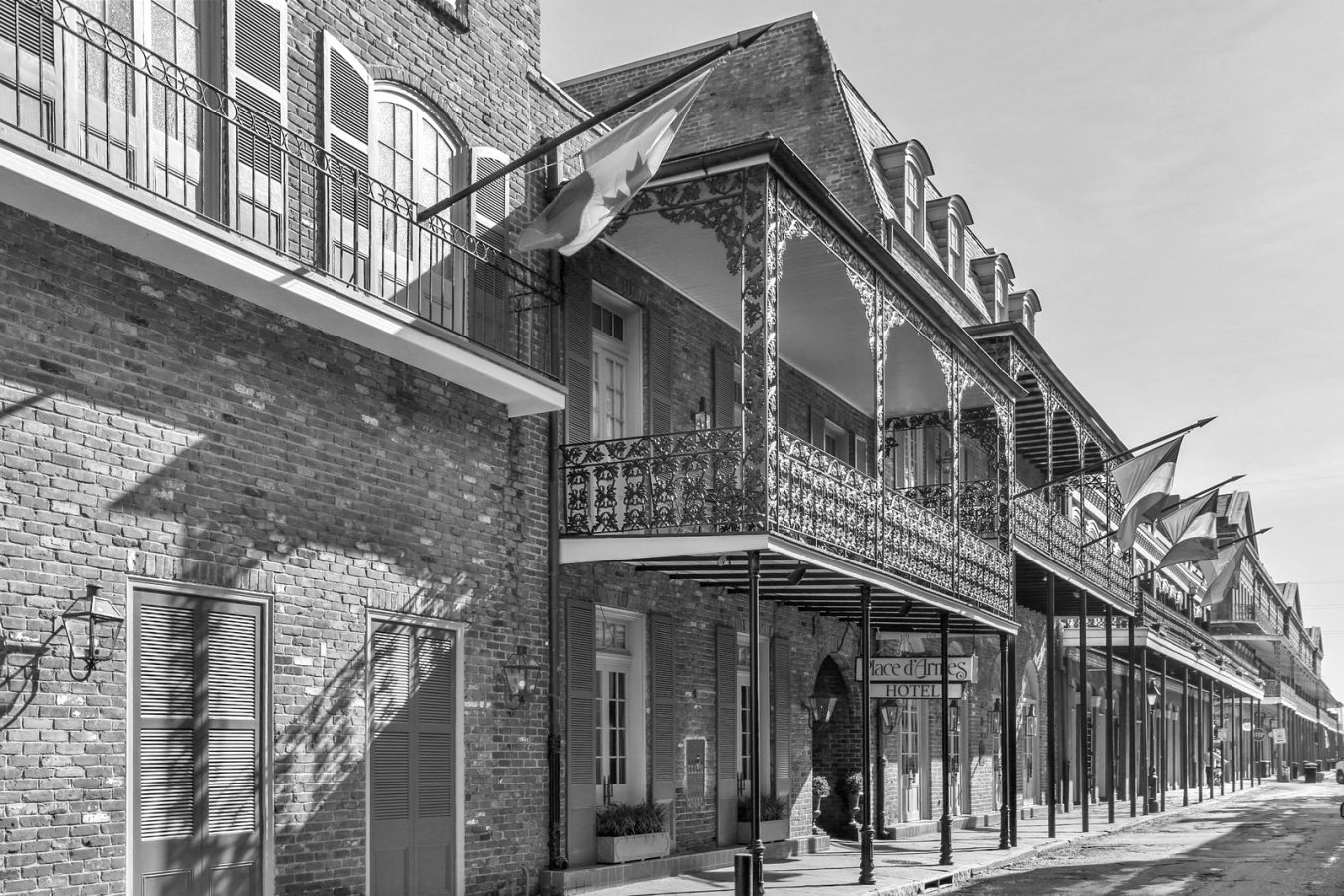
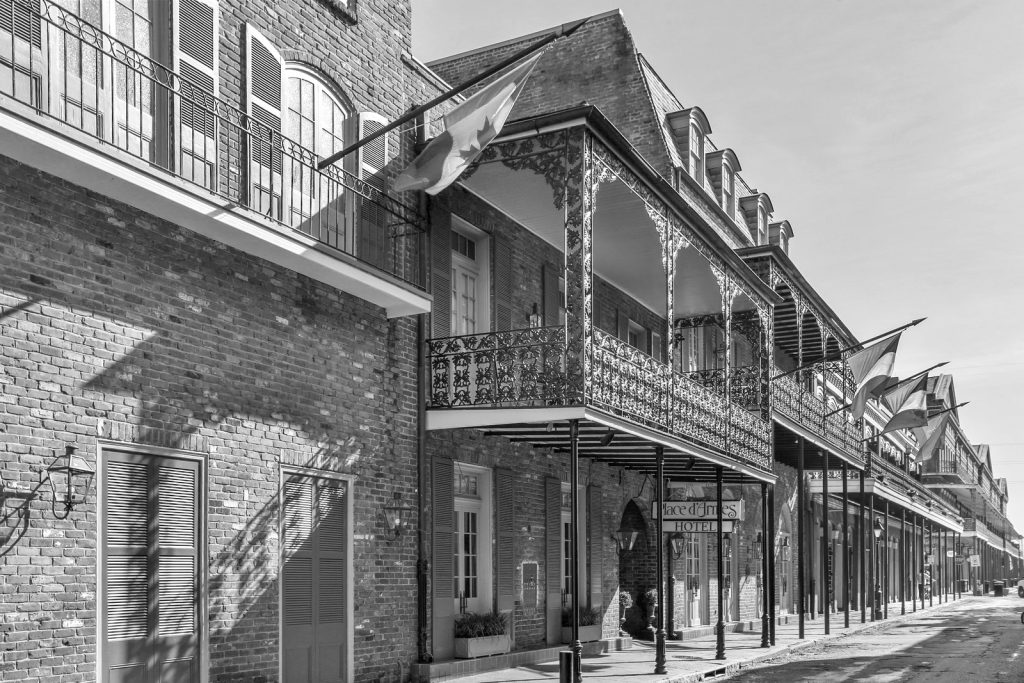
The Place d’Armes Hotel in the New Orleans French Quarter takes its name from the period when New Orleans was a French Crown Colony in 1722, during which the area now known as Jackson Square was called the Place d’Armes – military parade ground.  This distinguished hotel holds a unique position as the only hotel at Jackson Square – the very Center of the Vieux Carre Historic District (French Quarter).

New Orleans itself was founded in 1718 by Sieur LeMoyne de Bienville, who chose a strategically elevated spot near the sharp crescent bend of the Mississippi River—the only dry land for miles. French military architect Leblond de la Tour and his assistant Adrian de Pauger designed the layout for the new French Crown Colony, and at its center was the Place d’Armes, a parade ground designated for military drills and ceremonies.

As the years passed, most of the land surrounding the square was granted to employees and investors of the Compagnie des Indes, a trading company sanctioned by the King of France, and led by Scotsman John Law. Numerous early residents built their homes on these land grants, and records trace the ownership history. The Place d’Armes Hotel, however, is comprised of several parcels of land on Chartres Street and St. Ann Street, and none of the buildings that now compose the hotel pre-date 1794, as two major fires swept through the city in 1788 and 1794, destroying most structures.

Seven historic buildings form the Place d’Armes Hotel – five are believed to have been constructed between 1820 and 1880 two of the buildings were added in the 1960s. The row of three 3-story brick buildings at 809, 811, and 815 Chartres Street was built in the 1840s to 1850s and was purchased by Louis Bonnemar in 1844. These structures exemplify the simple Greek Revival architecture, characterized by post and lintel construction, and were initially owned by notable figures such as Jean Baptiste D’Estrehan, the French Colonial Treasurer of the Navy, and later by Francois Broutin, son of the renowned French Colonial architect Ignace Francois Broutin.

The building at 817 Chartres Street, now a 3-story brick structure, is believed to have been erected in 1835 for Dr. Felix Formento. Over time, cast iron galleries were added to the second and third floors, enhancing the building’s appearance. The site was also once home to the Union Hotel and Coffee House from July 1832 to March 1833, offering a range of amenities from ice cream and coffee to cockfighting on the premises.

The property at 617-619 St. Ann Street houses the modern 5-story hotel, constructed in 1964. This development involved the demolition of a warehouse dating back to around 1910, which was possibly used for wine storage. However, the site’s early history is quite significant. It was granted to Sieur Richaume in 1722 but later passed through various owners, including the Capuchin School founded by Father Raphael in 1725. The property changed hands multiple times before being developed into the hotel we know today.

The core property (lobby location) at 623-625 St. Ann was owned by Angelo Glorioso, a Sicilian immigrant (1903) who used the space as a residence and grocery warehouse.  Mr. Glorioso died in 1951 and willed the property to his only daughter, Mary Ann Glorioso Valentino, the Matriarch of the Valentino family who owns and operates the hotel today.  The Place d’Armes Hotel is a masterful restoration of seven, very historic, contiguous, structures that all surround a lush center courtyard (one of the most beautiful in all the French Quarter) in arguably the most coveted visitor location in all New Orleans – Jackson Square at the Mississippi River!

The hotel has welcomed visitors for over 60 years (since 1963) and boasts of its legions of guests who regularly call the Place d’Armes their home in New Orleans whenever they visit.  The Place d’Armes Hotel stands as a testament to the city’s resilience and timeless allure, offering guests an opportunity to immerse themselves in the lively spirit of the French Quarter while being connected to its storied past.

The Top 10 Landmarks Near Our French Quarter Hotel

french quarter fall
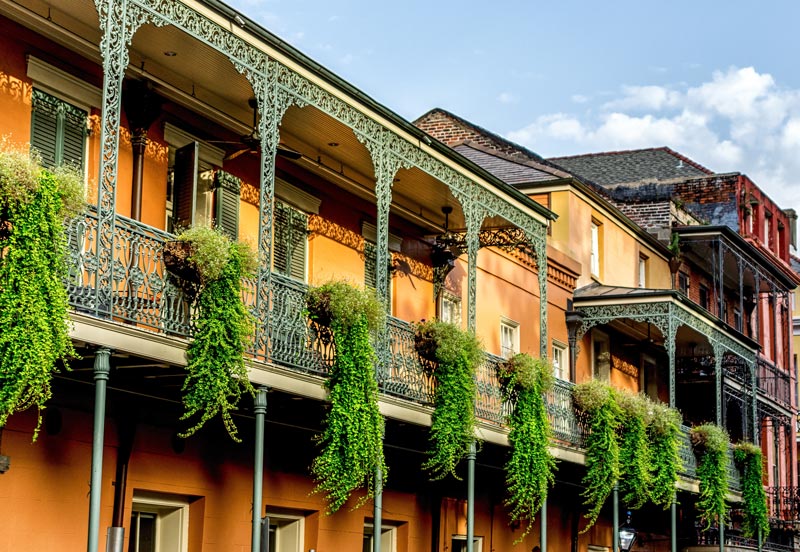
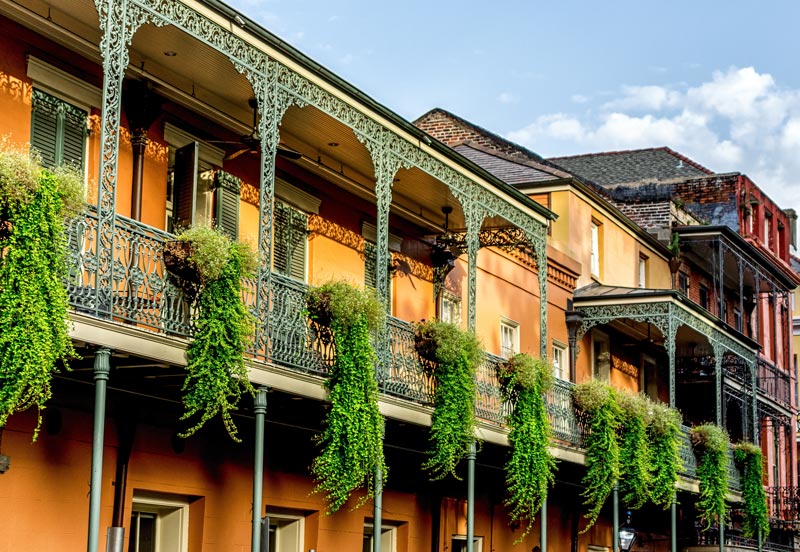
A wrought-iron balcony in the French Quarter, New Orleans

When it comes to travel with a twist of magic and adventure, it doesn’t get much better than exploring the French Quarter on foot. It’s the heart and soul of New Orleans, a testament to its colorful past — a richly woven tapestry of different cultures, cuisines, musical notes, and its everlasting joie de vivre — still manifested ’round the clock in so many unique ways.

Whether you’re on a quest to sample a savory Creole dish, dance the night away to a brass band, stroll the streets to admire the exquisite wrought-iron architectural details, or take in an eclectic street performance — this one-of-a-kind place has them in spades and pretty much around every corner.

While it’s easy to come up with a longer list of must-see landmarks in a city this old and colorful, here are our top 10 recommendations, all located within walking distance from each other in the French Quarter. There’s only one exception — Frenchmen Street is located in Faubourg Marigny, right outside the French Quarter.

1. Jackson Square

751 Decatur St.

This timeless landmark is located in the heart of the French Quarter. Known since the 18th century as Place d’Armes, it was renamed in honor of Andrew Jackson following the 1815 Battle of New Orleans. Jackson’s bronze statue is the focal point of the square, surrounded by lavish flora and facing the Mississippi River.

Jackson Square is also a host to the open-air artist market and performance space, with local art displayed along the fence. You can have your sketch done, dance to a brass band, or have your fortune told. Carriage rides are offered in front of the square. When you cross the street to the riverside, you’ll find the French Market, Cafe du Monde, and The Shops at JAX Brewery.

2. St. Louis Cathedral

615 Pere Antoine Alley

St. Louis Cathedral is the oldest continuously active Roman Catholic Cathedral in the United States. It stands between its two historic neighbors, The Cabildo and The Presbytere, overlooking Jackson Square and the block-long row of the Pontalba Buildings. St. Louis Cathedral is one of the most instantly recognizable buildings in the world, its famous steeples showing up on many a postcard and in quite a few films.

The Cathedral-Basilica of St. Louis King of France was built in 1724 and had been rebuilt twice after a hurricane and a fire. It was dedicated in 1794 and has enjoyed an illustrious and eventful history. One of its most famous caretakers was Pere Antoine, a popular Capuchin priest who had been pastor of the Cathedral from 1785 to 1790 and again from 1795 to the time of his death in 1829.

You can check out the Cathedral’s stunning interior during its hours of operation, and attend a mass or a music concert. If you’re just passing by, depending on the time of day, you may get to hear its bell or witness an occasional wedding party spilling out of the Cathedral, followed by a second line.

3. The Cabildo and The Presbytere

701 & 751 Chartres St., Jackson Square

Did you know that the 1803 Louisiana Purchase was signed at The Cabildo? This historic building served as the seat of government during the Spanish colonial rule, and was built to replace the building claimed by the fire in 1794.

Standing tall right next to St. Louis Cathedral, The Cabildo is now part of the Louisiana State Museum. It houses such precious artifacts as a painting of Marie Laveau by Frank Schneider; a self-portrait by Julien Hudson, an antebellum artist and free man of color; and Napoleon’s death mask, one of only four in the world.

On the other side of St. Louis cathedral is The Presbytere, built in 1791 in the style to match the Cabildo. It’s called “Presbytere” because it was built on the site of one, which served as a residence for Capuchin monks. The building served as a courthouse in the late 19th century and is now also part of the Louisiana State Museum, just like the Cabildo.

The Presbytere currently houses several temporary and permanent exhibits. The magnificent “Mardi Gras: It’s Carnival Time in Louisiana” tells the story of the Carnival traditions in Louisiana, including Cajun Courir de Mardi Gras, Zulu coconut throws, 19th-century Rex ball costumes, and much more. “The Living with Hurricanes: Katrina and Beyond” exhibit documents the natural disaster, its aftermath, and the ongoing recovery with interactive displays and artifacts.

4. French Market

2 French Market Place

French Market was founded in 1791 as a Native American trading post and has been operating continually since, making it the oldest public market in the country. Similar in structure to a traditional European market, this open-air mall covers roughly five blocks, from Cafe du Monde on Decatur St. across from Jackson Square to the daily flea market at the end of Esplanade Avenue.

Many retail shops and restaurants surround it in every direction. The flea market area hosts dozens of local artisans, plus vendors from all over the world. You’ll find souvenirs, handmade masks and jewelry, t-shirts, music, and more.

French Market also includes a small pedestrian plaza on Dumaine and St. Phillip streets called Dutch Alley. The food stands at the Farmers Market Pavilion offer a slew of spices, produce and local food that is uniquely New Orleans — from pralines to oysters to the beignet mix or the hot sauce you’d want to take home. The Farmers Market also hosts an annual Creole Tomato Festival to celebrate its harvest.

5. The Riverfront

1 Toulouse Street

You can access the mile-long riverfront very easily from the Jackson Square area. There you will find the grassy Woldenberg Park and a walkway called the Moonwalk, named after the former New Orleans mayor Maurice “Moon” Landrieu.

Woldenberg Park is a popular spot to watch the 4th of July fireworks. It also hosts one of the largest stages during the annual French Quarter Festival, which takes place in the spring.

Stroll along the Moonwalk to view public art, like the Holocaust Memorial, and watch the boats go by. The Riverwalk is also home to two popular family-friendly attractions, the Audubon Aquarium of the Americas and the Entergy IMAX Theater, soon to be joined by the Insectarium.

6. Bourbon Street

French Quarter

That much is true: Bourbon Street is home to one of the wildest nightly street parties in the country. It’s well known for its karaoke and burlesque clubs, bars that never seem to close, and crowds milling about round the clock. This endless party vibe makes Bourbon Street a great destination for your bachelor party, a girls’ night out, spring break, a couple’s getaway — and any other cause for celebration.

It is also one of the oldest streets in the country, a vivid example of Spanish colonial architecture dating back to 1798 and steeped in history, magic and legends. It’s home to the city’s most iconic destinations like Galatoire’s and the Old Absinthe House. One of the best jazz clubs in the country, if not the world, also has a Bourbon Street address. Fritzel’s European Jazz Pub is located in a historic 1831 building and hosts live, traditional jazz performances nightly, attracting jazz aficionados from all over the globe.

7. Lafitte’s Blacksmith Shop

941 Bourbon Street

This ancient, at least by North American standards, bar is housed in a Creole cottage on the corner of Bourbon and St. Philip streets. Lafitte’s Blacksmith Shop was built between 1722 and 1732, and it’s said to be the oldest structure used as a bar in the U.S.

It’s also said to have been used by the infamous Lafitte Brothers, Jean and Pierre, as a base for their smuggling operation in Barataria, operating as a facade for the privateers. We won’t likely know the truth beyond the legend, but the bar is dripping in magic and history, making it a popular destination for locals and visitors alike.

8. Old Ursuline Convent

1100 Chartres Street

The Old Ursuline Convent was built in 1752, which makes it the oldest surviving example of the French colonial period in the country, circa Louis XV. The building first served as a convent for the Ursuline nuns, and then, as centuries ticked on, it had been, at some point: a school, an archbishop’s and priests’ residence, archdiocesan offices/archives, and is now part of the Catholic Cultural Heritage Center of the Archdiocese of New Orleans. Its museum is open for self-guided tours.

9. Royal Street

French Quarter

Only one block away, running parallel to Bourbon Street, Royal Street presents a very different scene — a mix of performance art, live music on the corners, eclectic art galleries, funky boutiques, and upscale antique shops. The French Quarter part of Royal Street stretches for 13 blocks, from Esplanade Avenue to Canal Street, and the stretch between St. Louis and St. Ann streets is a pedestrian mall closed to traffic from 11 a.m. to 4 p.m. on weekdays and till 7 p.m. on Saturdays and Sundays.

The scenic street is also known for its wrought-iron balconies plus other charming architectural details and lush courtyards, including those featured by the street’s many restaurants. Consider having the iconic bananas Foster in Brennan’s stunning outdoor seating area.

Among the notable art galleries are Harouni, 933 Royal St., featuring the artist’s own work; and Rodrique Studio, 730 Royal St., with his ubiquitous Blue Dog paintings on display.

As for shopping for antiques, from exquisite chandeliers to rare 17th-century furniture to fine art and jewelry, Royal Street also got you covered. M.S. Rau, 630 Royal St., for instance, is considered one of the best destinations in the world for antique shopping.

10. Frenchmen Street

The Marigny

Frenchmen Street is a three-block area with one of the best and most densely packed live-music venues and restaurants in the city. It’s located in Faubourg Marigny, right next to the French Quarter, featuring more than 20 bars and clubs, plus a night art market, a smattering of diverse restaurants, and live music on street, especially at night. Jazz, brass, funk, DJs — you name it — and it’s playing on the corner somewhere on Frenchmen.

Some of the city’s best clubs are located on Frenchmen and offer live music seven nights a week, day and night. The Maison, for example, has three floors and a packed late-night show calendar year-round. Dragon’s Den offers a diverse and eclectic mix of music on its two live music stages, plus the lure of a courtyard and a balcony for a more relaxed experience.

Marigny Brasserie‘s outdoor seating is as elegant as it is perfect for people-watching. Three Muses and Snug Harbor Jazz Bistro are the dinner-and-a-show kind of places that focus on Creole and regional cooking, and d.b.a.‘s roster of world-famous musicians who have played there is legendary.

For smaller venues and a more intimate ambiance, you can try The Spotted Cat Music Club or the cozy, divey Apple Barrel. Finally, top off all the blues and funk with Adolfo’s Creole Italian cooking, from a tiny old-school restaurant directly above the Apple Barrel.

Remember, you can walk to all these places from your hotel! Take advantage of Place d’Armes specials, group rates, and best-rate guarantee for greater savings to spend on New Orleans famous French Quarter cuisine and enjoy everything this magnificent city has to offer. Reserve your room today!